Wild Lily

Ever since we married, my wife had insisted on having a sturdy yet modest dining table for every home we ever moved to. She asserted that the dining table was fundamental to the togetherness of the family because no matter how busy, family members always sat together around the table by the end of the day. She often referred to the table as the heart of the family. She further stated that the table would have immense influence on the personal development of our daughter, Lily, because she believed that a person could be shaped by her surrounding. That was her argument for us moving to a simple three-story house in Fort Lee from our cozy apartment in Baltimore, too. Hoping to mold our daughter into a strong and humble individual, we decided on an oak table that could further bolster such environment with its simple brown color and durable property. Starting from issues as trivial as dining table to those as complex as college application process, we put maximum effort into Lily’s upbringing; as a result, we had great expectations for her. As a neurologist myself and my wife a pediatrician, we thought that, given our extensive knowledge in brain development and children growth, we could propel her to become a successful physician with ease while providing her with the resources we had worked so hard for. We thought we knew everything, every possible outcome, and every avoidable mistake in parenting. Like how my father dreamed of me becoming a doctor, I yielded the same hope for my daughter.
We tried to keep Lily as close to us as possible so as to ensure her healthy development. However, when it came to high school, we had no choice but to send her to a prominent boarding school that could increase her chance of entering a top-notch college. We had preferred for her to attend Johns Hopkins University given that both my wife and I graduated from there. It was during her last year at the Phelps School when the chain of events began.
The two of us sat next to each other that night, around the now wobbly table, under the dim light. We were waiting for a phone call from the Phelps School regarding our daughter’s “disruptive behavior” that would change our lives drastically. My wife reached out for my hand. Although I was slightly taken aback, I held her sweating hand firmly and felt her dread. I wanted to comfort her, hold her, and talk to her but all I could do was stare into the darkness of our backyard. I listened. I heard her heavy breathing. I heard the crickets chirping. I heard the trees rattling in the wind. I heard the sickly, banal rhythms that I had heard all my life. In a way nothing had changed; I felt like my father anticipating my failures just as his father had with his. All of us worried so tediously about something out of our control, something only fate could decide.
“I am so nervous,” my wife whispered as if she was afraid that talking any louder would prevent her from hearing the phone rang. A tidal wave of emotions overwhelmed me, tapping into a reservoir of pain and rage accumulated from the decades of repression and “faking it”. I exploded and threw my chair against the wall. I yelled, “You are nervous? Is that all you can do, be nervous? Martha, you are so predictable and useless that it is absolutely disgusting!” She stared at me in horror, wordless as she gasped for air to fight down the tears. She stood up abruptly, brushed off the wood chips on her and turned her back towards me as she retreated towards the living room. I looked at her greying ponytail swing from left to right. It seemed so heavy on her, heavy enough to drag her delicate aging frame down. We were so old and so helpless. I thought about the passionate, hopeful teens that we once were.

Martha and I met at a medical conference in Minneapolis early February of 1996, the winter that broke the state temperature record with an impressive -60 degrees. While every member, including me, was distracted by the intense snowstorm shaking and pounding the building every few minutes, Martha gave her presentation on the relationship between food dye and ADHD in children, a statement so novel and advanced that only the most experienced among the experts could understand. However, her speech was so passionate and mesmerizing that she received a standing ovation from all 500 doctors in attendance that day. With the spotlight on her and the ardent aura surrounding her, she blushed and smiled. She was so beautiful. I rushed to the backstage to meet her right after her speech but I was too late. Although she had always fascinated me since then, I did not see her again until the fall of 2001 when she was transferred to my research facility in Baltimore to continue her research.
The moment I saw her, I knew I was going to marry her. It was meant to be otherwise fate would not have brought us together again. We would often meet up at the 24-hour Café Diem around the corner of our college dormitories, complain about our superiors and talk about our dreams all night long until dawn. She wanted to become the director of the Department of Health to combat businesses that promotes morbid eating habits while I wanted to move to Manhattan, a place I dreamt of living in for decades. We had planned out all the details and yet we never had the time to carry them out. Everyday, we persuaded ourselves that we had more to accomplish and prepare for before we could brazenly pursue our dreams. We continued to plan our future until the day we retired and realized where we ended up.
Reflecting upon what went wrong along this path of disappointment, I stood in the kitchen in silence until my body finally gave away. I slumped to the floor and sighed softly, “Martha, there is nothing we can do and nothing we can change. All this bullshits is wearing me out like acid corroding my heart and all we do is worry and complain.” Expecting an answer, instead I heard the front door slammed close. I lied on the floor and looked at the ceiling, contemplating what I had done. It was neither our worst fight nor the first time she walked out on me. Relived by the thought, I assured myself that she would come back in a matter of time. I felt the cold tile beneath me slowly draining my anger away along with my energy, and the plain white ceiling enclosing me in eternal nothingness and relentless anxiety. That was the first time I cried since I was a kid. Lying with tears on my face, I fell asleep with the emptiness blinding my senses. I had a dream about a protest against the oppressive government I participated in Taiwan in March 1990.
I was lost in the middle of a sea of protestors, people yelling and sirens screaming in all direction. I panicked and started running along with the crowd. We charged forward to push through the barricades with nothing but our bodies to offer. Behind the barricades were masked men of enormous statures, shooting at anyone who dares to approach. Their masks changed between my family, my colleagues, and my patients, all of whom were staring me down with hollow eyes, so abyssal that even black holes could not compare. Those eyes were expecting me to obey. On the edge of retreating, I looked down and saw myself holding a Molotov cocktail. I thought to myself, “Fuck it.” I threw the bomb against the barricades as a bullet flew passed me. It exploded at the masked men, taunting me with their chilling masks. Suddenly, I felt a surge of euphoria driving me forward into the barricades, which did not look so intimidating anymore. I yelled along with my comrades as we crashed into the bayonets of the masked men. Instead of howling in pain, I laughed, “You cannot hurt me. We are free.” Sirens and desperate shrieks deafened my senses and I kept on laughing.

I jolted awake as the sirens became unbearably loud. I sat up and found the phone ringing furiously, demanding an answer. I smiled as I picked up the phone.
“Hello,” I answered with a relaxed tone and put my phone on speaker, “this is Mr. Chang. How may I help you?” After the Headmaster, Mr. Deacon, introduced himself and sent his regards to Martha, who was, according me, grocery shopping, he gave me a brief summary of events that led to this phone call. “Lately, Lillian has been openly criticizing and disobeying numerous school rules. As a student of the Phelps School, she is expected to follow the rules established in the Handbook when she signed her pledge,” he paused for a second, “Normally, a few demerits would be suffice for such situations but in this particular case, Lillian, as the president of the Student Government Association, was able to rope the entire student body into participating in her little rebellion against the administration. Her disruptive behavior has not only caused conflicts between the students and the administration but also torn the faculties apart.”
I felt nauseous as I began to digest the words after the initial shock. I felt a lump in my throat as I quietly asked, “What was Lily rebelling against?” “Lillian complained about the amount of money required to follow the dress code and wore jeans to school meetings where she would be on stage talking in front of the whole crowd. Other times, she conspired with her classmates to skip classes to protest against what she condemned to be a dysfunctional schedule.” Surprisingly, I felt an influx of relief and pride flowing into me all of a sudden; although I knew what Lily did was wrong, I was subconsciously proud of her. “Her behaviors, to me, seemed fairly reasonable,” I challenged Deacon with a now louder and stronger tone, “so what was so bad about it?” “Lillian was undermining the tradition of the Phelps School that students have been following since the establishment of this institution. She was destroying the Phelps experience that the administration had worked tirelessly to preserve for the sake of the students themselves. Surely, as a Phelps alumnus yourself, you can understand the point I am making here.” I snorted. “Please, Mr. Chang,” Deacon continued, “unless you ask Lillian to cease all her wrongful activities, I am afraid that, on the behalf of the Administration, I will have to expel her from the Phelps School.”
“I am not going stop my daughter. In fact, I fully support her stance.” I stated calmly, hiding my rage. Deacon shouted in disbelief, “Mr. Chang, you must be out of your mind.” Scenes from my dream flooded into my mind: the taunting masks, the charging protestors, and my hysterical laughter. I knew what I had to. I yelled into the phone, “Mr. Deacon. No offense but assholes like you people were obsessed with the tradition and desperate for control, causing the society to crumble around us. You are blinded by the conformity in the past that you fail to recognize that the rules from the past do not apply anymore. The rules are not only useless but also detrimental to the society. My daughter understands that only change can bring back the harmony and I am proud of her. As a responsible member of the society, you can surely understand the point I am making here. Asshole.” I hung up before Deacon could say anything. Instantly, I felt a sense of comfort replacing the pain that had been buried deep inside my heart. I heard my heart beating through my ear, a rhythm I was never aware of. I thought to myself, “I can really use some whiskey right now.” I sighed in relief and slowly walked towards the living room.
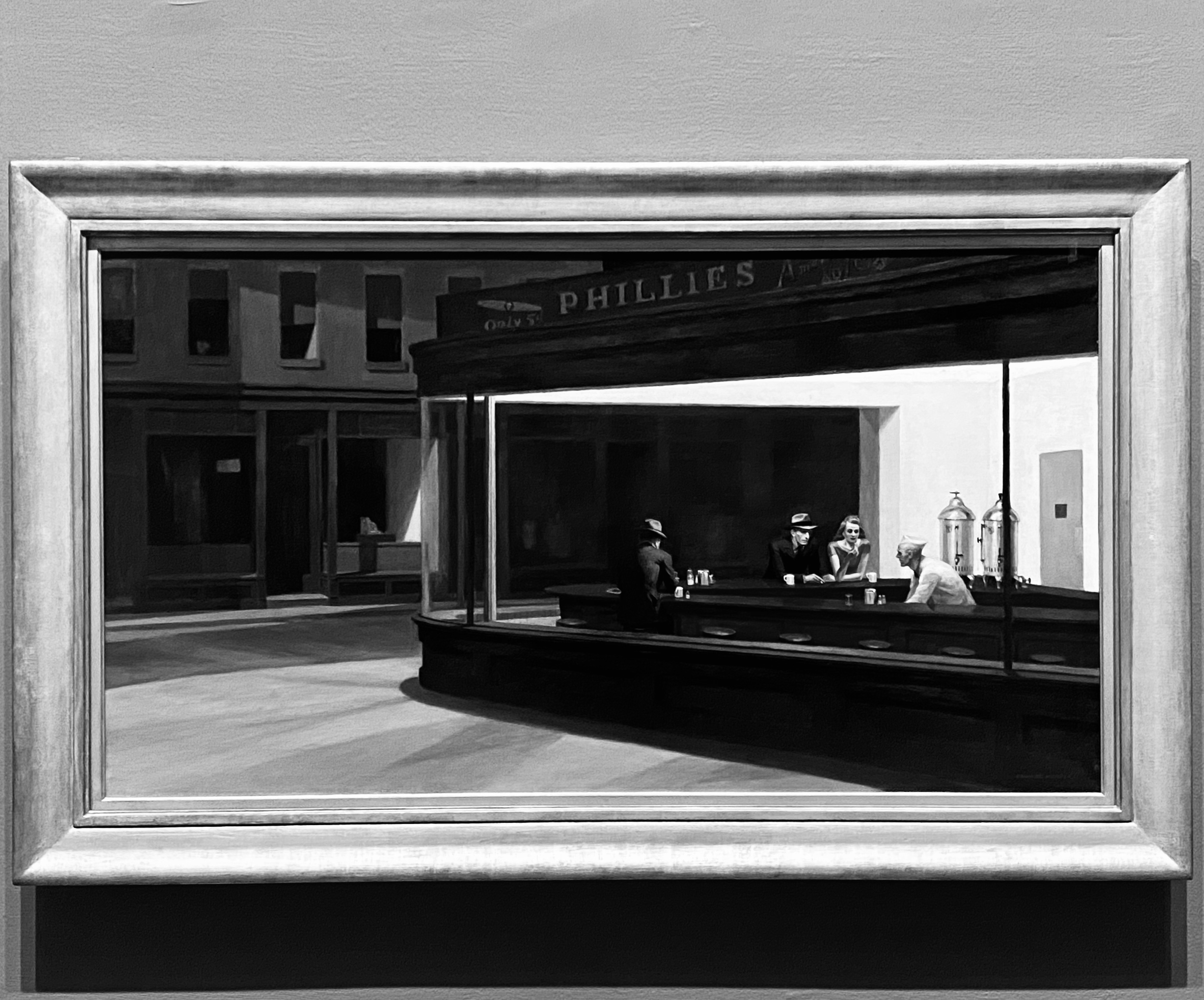
In the living room, the fireplace was roaring and sparkles of flame rose into the air, like my spirit. I looked at the fire in amazement, admiring its forever changing form. I could stare at it forever. Unexpectedly, out of corner of my eye, I spotted a nine by twelve envelope lying perfectly still on the coffee table. On top of it was a lavender-scented letter hand written by Martha who had loved lavender ever since we watched the documentary on Hokkaido, where we had planned to visit for our honeymoon. I did not have to read the letter or the envelope to know what they were; they were same ‘package’ my mother handed my father when she left him after three decades of countless fighting. I chuckled at the thought of that in a way everything had changed yet nothing had really changed.
– Stanley Chang
(Updated July 2023)
 From The Island .TW